Feedback-Driven Development: Building What Users Actually Want
Learn how collecting continuous user feedback can help you prioritize features and fix bugs faster.
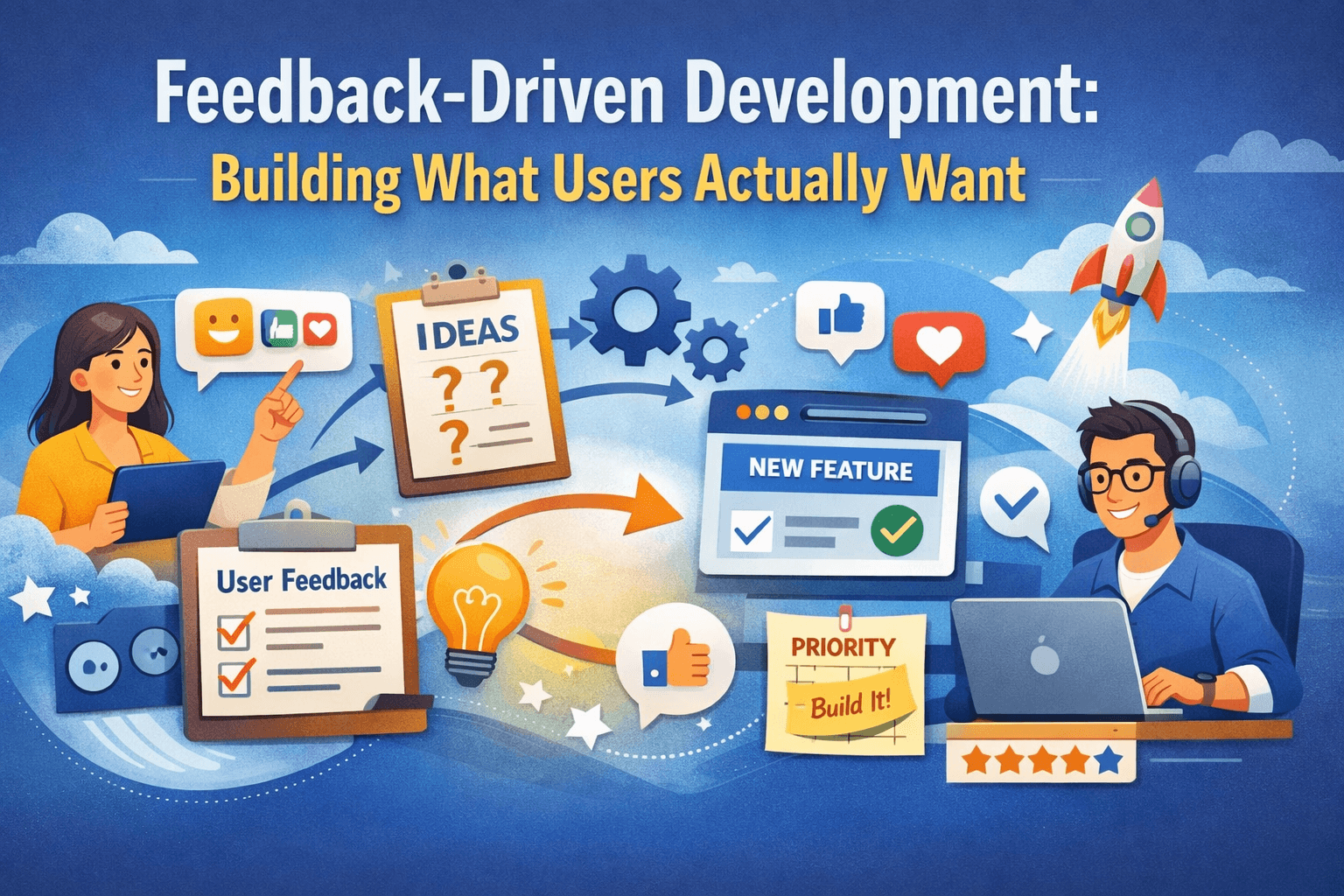

Most products fail not because of bad code, but because they build the wrong things. Feedback-driven development helps you build what users actually want.
What is Feedback-Driven Development?
Feedback-driven development (FDD) is an approach where user feedback directly influences your product roadmap. Instead of building features based on assumptions, you build based on what users tell you they need.
The Traditional Approach (and Why It Fails)
Traditional product development: Product manager has an idea, team builds the feature, feature ships, users don't use it, team wonders why. The problem? No user input until the end.
The Feedback-Driven Approach
Feedback-driven development flips this: Users share pain points, team identifies patterns, team builds solutions, users validate the solution, team iterates based on feedback. You're building solutions to real problems, not imagined ones.
How to Implement FDD
Make Feedback Easy: If collecting feedback requires effort, users won't do it. Add a feedback widget to your site, allow video/screenshot/text feedback, don't require account creation, and keep forms short.
Collect Continuously: Don't wait for scheduled user interviews. Collect feedback all the time - after key actions, when users seem stuck, when they use a feature frequently, and when they abandon a flow.
Categorize and Prioritize: Group feedback into bugs (fix first), feature requests (group similar ones), UX improvements (look for patterns), and general comments. Prioritize based on frequency, impact, and effort.
Close the Loop: When you act on feedback, let the user know, show them the fix, and ask if it solves their problem. This builds trust and encourages more feedback.
Real Examples
Bug Discovery: User encounters bug, records 10-second video, you see the exact issue, you fix it same day, user gets notified.
Feature Prioritization: 50 users request export feature, 5 users request dark mode, you build export feature first, users are happy.
UX Improvement: User submits video of confusion, you see they missed the "Next" button, you make button more prominent, conversion rate increases.
Common Mistakes
Don't ignore patterns - one user requesting a feature might not be important, but ten users means pay attention. Don't build everything - focus on what aligns with your vision. Don't skip follow-up - if users give feedback and hear nothing back, they'll stop. Don't get analysis paralysis - act on clear patterns quickly.
Measuring Success
Track feedback metrics (submissions per week, response time, % acted upon), product metrics (feature adoption, bug frequency, satisfaction scores), and business metrics (churn rate, NPS score, support tickets).
Getting Started
Week 1: Setup - add feedback widget, set up notifications, brief your team. Week 2: Collect - encourage feedback, review all submissions, start categorizing. Week 3: Act - pick top 3 most-requested items, fix them, notify users. Week 4: Iterate - measure impact, collect feedback on changes, plan next sprint.
The Bottom Line
Feedback-driven development isn't about building everything users ask for. It's about building the right things - the things that actually solve user problems. Start collecting feedback today and let your users guide your roadmap.
Ready to collect better feedback?
Add video, screenshot, and text feedback to your site in minutes.
Get Started Free